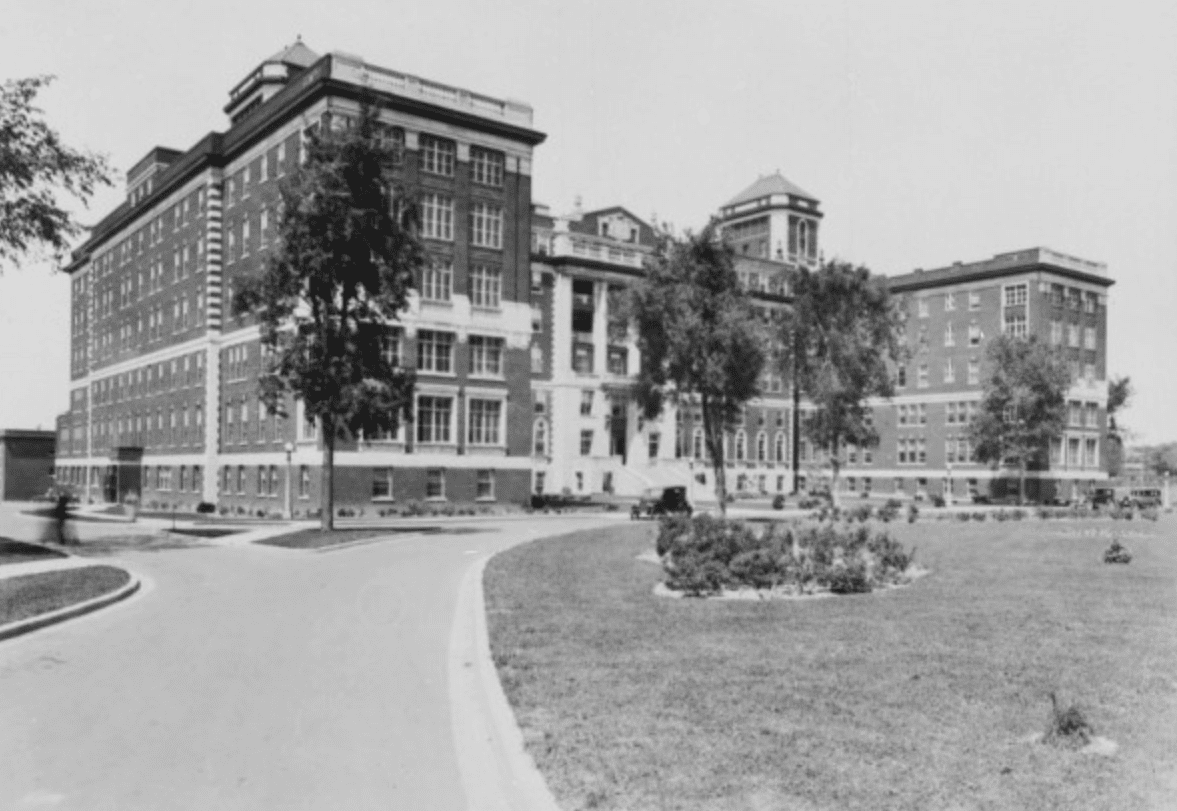

Ottawa is home to a network of hospitals, including the Ottawa Civic Hospital, which operates as one of three campuses under The Ottawa Hospital. The network also includes the General and Riverside campuses. More details on iottawa.net.
The Origins of the Ottawa Civic Hospital
In the 21st century, the Ottawa Civic Hospital is located on Carling Avenue. In the early 19th century, this land was owned by Irish immigrants who had moved to Canada to assist in the construction of the Rideau Canal. Originally marshland, the area was purchased and transformed into farmland by these settlers. Over time, the farm on Carling Avenue became one of the most prosperous in 19th-century Canada. As the land developed, more homes, farms, and residents arrived, increasing the need for schools, daycare centres, colleges, and hospitals.
The influenza pandemic of 1919 revealed a dire need for more hospital beds in Ottawa. That same year, Mayor Harold Fisher proposed establishing a new hospital in the area. The city government acquired 25 acres of farmland from a farmer named Reid to construct the hospital. Plans also included a nursing school on-site. However, the hospital’s location, surrounded by farmland, was met with skepticism, and many Ottawa residents doubted it would ever open.
Despite public ridicule, Harold Fisher’s vision came to fruition. The Ottawa Civic Hospital was completed and opened in 1924, with a capacity of 549 beds. By the 1930s, the farmland around the hospital had given way to residential development, forming a new community centred around Carling Avenue. The construction of this modern hospital cost over $1.5 million.
The hospital catered to a wide range of patients, including those who could not afford treatment. During the late 1920s, Ottawa experienced outbreaks of diphtheria, tuberculosis, and scarlet fever, leading to overcrowding at the hospital. These years were challenging, with even medical staff falling ill. The situation improved by 1930 through widespread vaccination efforts, significantly reducing the frequency of epidemics.
Fascinating Historical Facts About the Ottawa Civic Hospital
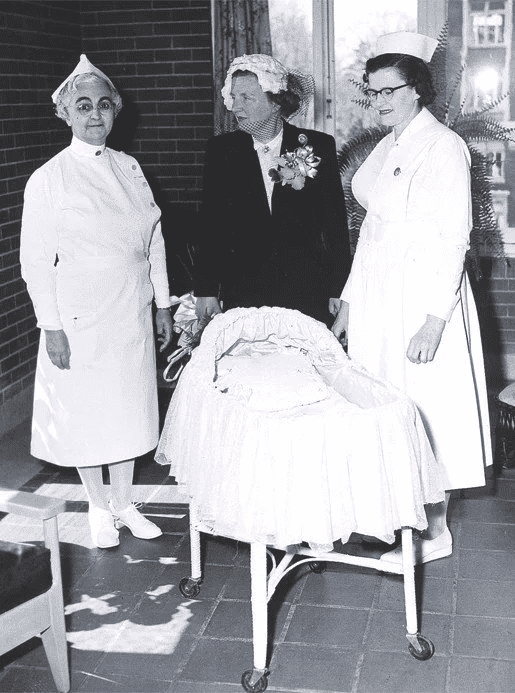
During World War II, the Canadian government provided refuge to the Dutch royal family. While in Ottawa, Princess Juliana gave birth at the Ottawa Civic Hospital. To ensure her daughter, Princess Margriet, could inherit Dutch citizenship rather than Canadian, the Canadian government declared the hospital’s maternity ward temporarily extraterritorial.
The Ottawa Civic Hospital in the 21st Century

Today, the Ottawa Civic Hospital is one of the city’s most frequented medical centres. It boasts state-of-the-art equipment and innovative technologies for patient diagnostics and care.
The hospital also stands out for its unique architecture and proximity to local parks. Nearby amenities include playgrounds, daycare centres, sports fields, tennis courts, and more, making the area convenient and family-friendly.
The Ottawa Civic Hospital continues to play a critical role in providing exceptional healthcare to the community while maintaining its historical and architectural significance.