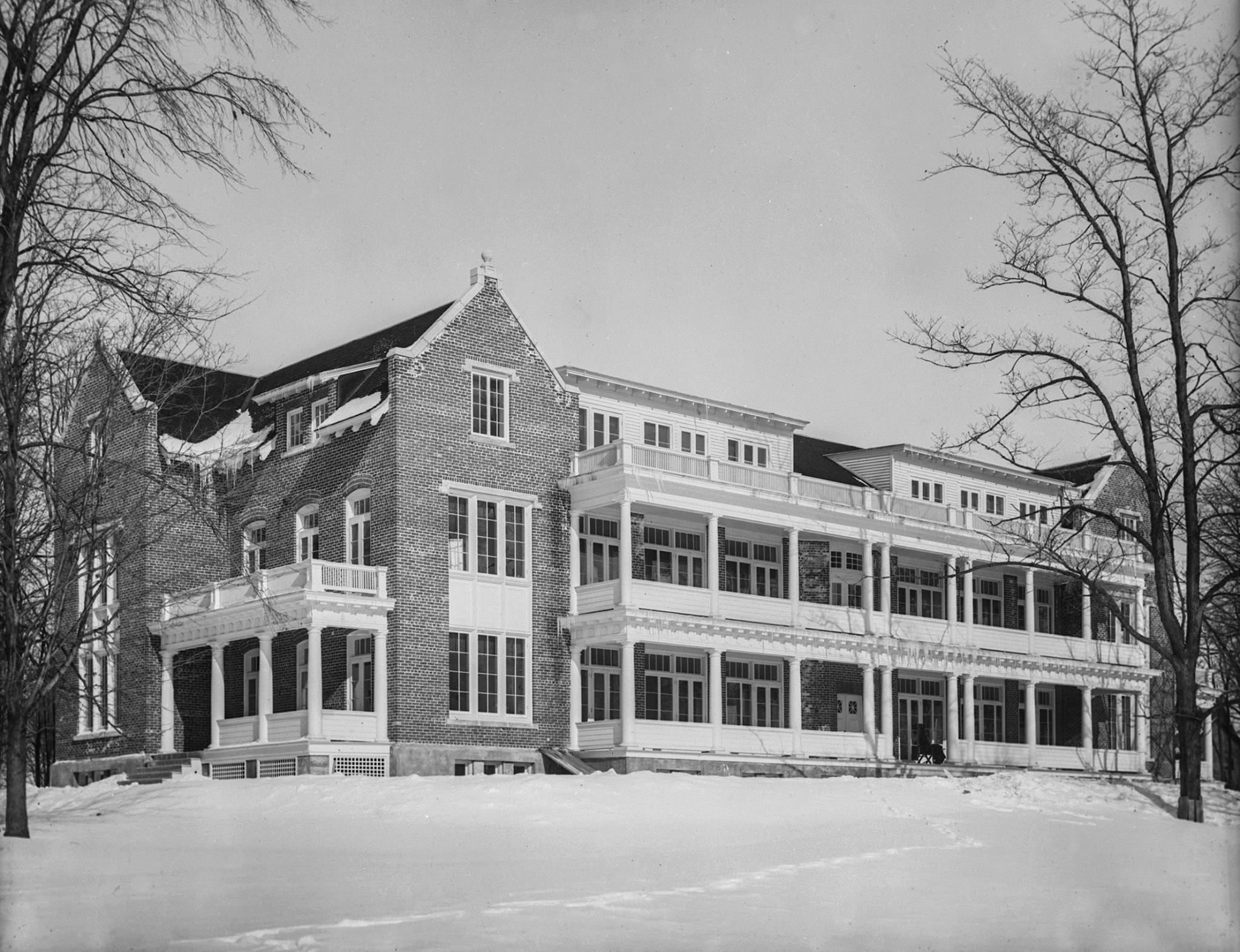

On April 2, 1970, the last tuberculosis ward at Ottawa’s Royal Hospital was officially closed. Originally founded as Lady Grey Hospital in 1910 to combat the deadly scourge of tuberculosis, thousands of patients passed through its doors over the decades. Learn more about the institution’s history and the experiences of its patients on iottawa.net.
Patient Memories
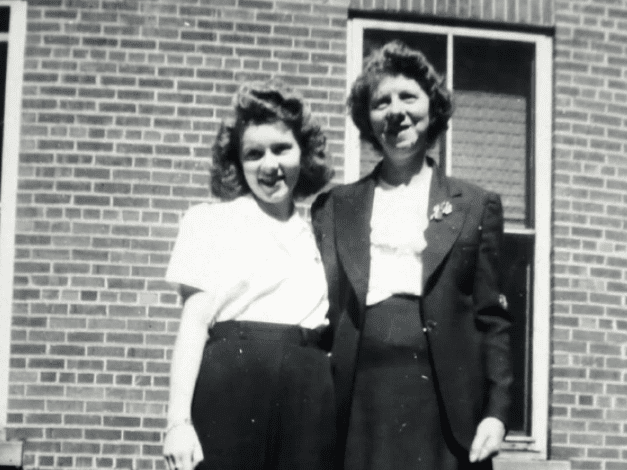
In 2014, Irene Balchin of Ottawa shared her recollections of life with tuberculosis. Diagnosed at age 13, Irene was enjoying her first year of high school in Glebe when a routine tuberculosis screening revealed her illness.
This was 1944, and no effective treatment existed. The only solution at the time was isolation in sanatoriums, where treatment consisted of fresh air, bed rest, and physical exercise. Ottawa’s Lady Grey Hospital became a home for many patients for years.
What happened to Irene and others like her? They were isolated. Irene was initially fortunate to undergo isolation at her family home in Centretown, with only her mother allowed to visit. At that time, Lady Grey Hospital was overcrowded, leaving many patients without access to care. It was a difficult experience for those left alone without family or friends.
Interest in the sanatorium was rekindled with the release of the book Clara’s Rib in 2010, co-authored by Anna Rein of Ottawa. The book detailed one woman’s experience at Lady Grey Hospital, capturing the isolation and challenges of living “within four walls.”
Life in the Sanatorium
For many patients, a tuberculosis diagnosis felt like a death sentence, even though this was often a misconception. Accounts from those who stayed at the tuberculosis ward provide insights into the activities offered:
- Leatherworking and rug-making workshops
- Studying and completing school or university assignments
- Playing card games and solving crosswords
- Reading, writing letters, and listening to the radio
- As patients recovered, they were allowed to dine in the cafeteria and stroll along Carling Avenue
Life in the sanatorium was often described as monotonous, but surviving the illness brought a new appreciation for life.
The authors of Clara’s Rib organized several patient reunions. These events allowed attendees to reminisce about both the challenges and moments of joy. Lady Grey Hospital frequently bore witness to losses—parting with dying friends, children who couldn’t recover, and others. Today, Ottawa’s Royal Mental Health Centre hosts reunions for former sanatorium patients in its facilities.
Closure of the Tuberculosis Ward
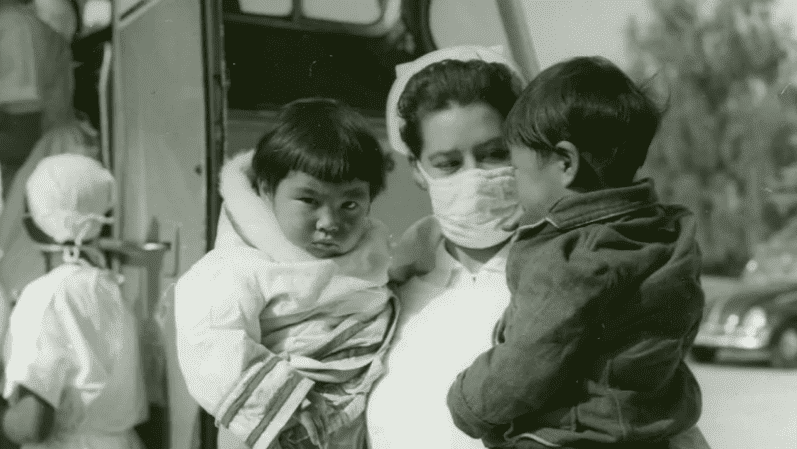
Looking at mortality statistics from the first half of the 20th century, tuberculosis was one of the leading causes of death in Canada.
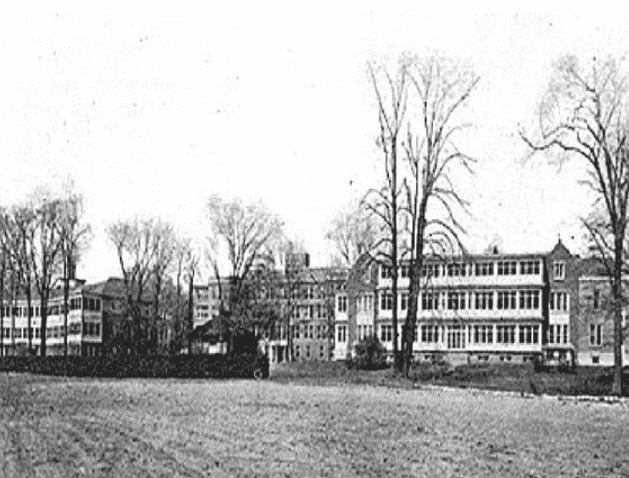
Between its opening in 1910 and its closure in 1970, Lady Grey Hospital treated approximately 11,000 patients. Fortunately, decades of research led to significant advancements in tuberculosis treatment, allowing the hospital to repurpose its facilities by the 1960s.
Tuberculosis Ward Statistics
Each statistic represents a difficult story, some with happy endings and others without:
- By 1953, the sanatorium had 19,000 beds at its peak.
- In the 1950s, tuberculosis patients typically spent about a year in the facility.
- In 1900, approximately 180 out of every 100,000 Canadians died of tuberculosis, compared to just 0.6 per 100,000 by 1980.
- A milestone came in 1947, when the antibiotic streptomycin became available in Canada, drastically reducing tuberculosis mortality rates.
Transformation of Ottawa’s Royal Mental Health Centre
Initially known as Lady Grey Hospital—or simply “The San”—the facility was renamed Ottawa Royal Hospital after the tuberculosis ward closed in 1970. In the 1980s, the hospital briefly housed the notorious murderer Andrew Leyshon-Hughes.
Eventually, the aging hospital was replaced with a new, state-of-the-art facility, completed in 2006 at a cost of $143 million. The official opening ceremony was attended by then-Premier Dalton McGuinty.
Today, the Royal Ottawa Hospital is a modern psychiatric care and teaching facility dedicated to serving the community.