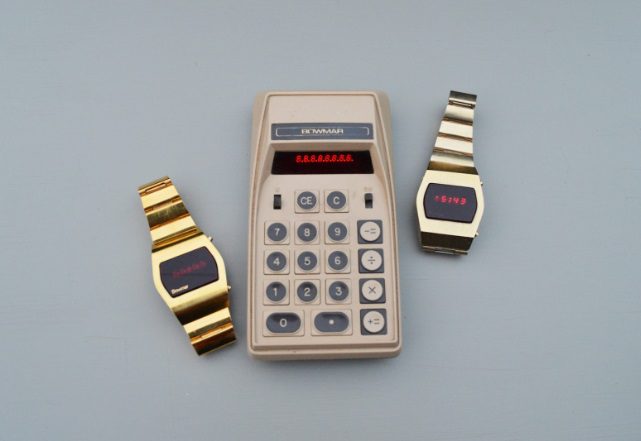

Few residents of Ottawa know that the handheld digital calculator was developed in the Canadian capital. During the 20th century, fierce competition emerged among various companies striving to incorporate an Ottawa-engineered microchip into compact calculators. Learn more at iottawa.net.
What Was Developed in Ottawa?
In the 20th century, Ottawa gained recognition for its innovative engineers, cutting-edge companies, and groundbreaking developments. One of the most notable achievements came from Bowmar Canada, which introduced a revolutionary LED technology that made handheld digital calculators feasible not only in Canada but globally.
Bowmar Canada designed the first-ever red digital LED displays for handheld calculators. The company also pioneered the production of digital wristwatches utilizing similar technology.
The Success of Bowmar Canada
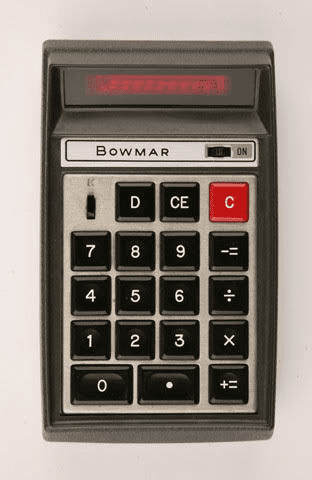
The 20th century witnessed intense competition among tech firms vying to integrate microchips into compact computing devices like calculators.
The Bowmar 901B, developed by Bowmar Canada, was the world’s first pocket-sized four-function calculator, allowing Ottawa residents to perform addition, subtraction, multiplication, and division automatically.
This groundbreaking innovation was soon acquired by global companies, and handheld digital calculators based on Bowmar Canada’s technology began appearing worldwide.
By the latter half of the 20th century, international firms refined the design, producing even smaller calculators. Simplicity and compactness became crucial factors in their popularity.
A Brief History of Calculators
The history of computational devices dates back to the 17th century with Blaise Pascal’s invention of the first mechanical calculator, capable of performing basic addition.
Mass production of calculating devices began only in the late 19th century. Machines like arithmometers were widely used in accounting, engineering, statistics, and tabulation.
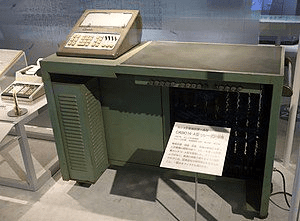
Electronic calculators with button inputs emerged in the mid-20th century. Early models employed relays and later transitioned to semiconductor components. These devices were initially bulky and heavy, often weighing over 100 kilograms and taking up as much space as a piece of furniture.
In 1957, Casio introduced the first commercial calculator capable of performing four arithmetic operations on 14-digit decimal numbers. Weighing approximately 140 kilograms, this machine featured a keyboard, display, and relay-based computing system. It consumed about 300 watts during operation and resembled a desk with an integrated computing unit.
The real revolution in calculator manufacturing came from Ottawa. Bowmar Canada developed the first compact digital calculator, measuring just 131 x 77 x 37 millimetres. This fully digital device could perform four arithmetic operations, similar to its predecessors. In the 20th century, the Bowmar calculator was priced at approximately $240 in Ottawa, a significant innovation in both size and functionality.