

Canada’s capital truly has a lot to offer both locals and visitors alike. Ottawa is home to seven of Canada’s nine national museums, making it a dream destination for culture lovers and history buffs. Simply add a visit to one (or more!) of these incredible institutions to your itinerary. Let’s take a closer look at the Canadian Museum of History and what makes it special, all on iottawa.net.
History of the Museum
This museum has certainly come a long way since its humble beginnings.
It all started in 1856 when the museum was founded in Montreal. Originally, it served as an exhibition hall to display collections from the Geological Survey of Canada. Its first exhibits featured minerals and biological specimens, alongside historical and ethnological artifacts.
In 1881, the museum relocated to Ottawa. By 1910, it was officially named the National Museum of Canada. However, by 1968, it became clear that the institution needed to be divided to allow for more focused specialization. This led to the creation of the Canadian Museum of Nature and the Museum of Man.
In 1989, the Museum of Man moved to a brand-new building in Gatineau and was later renamed the Canadian Museum of Civilization. This move marked a new chapter in the museum’s development, with a renewed focus on exploring civilizations and cultures.
The museum adopted its current name, the Canadian Museum of History, in 2013. This rebranding reflected its evolving mission: to focus specifically on Canadian history.
Looking back at the Canadian Museum of History’s journey reveals a remarkable evolution from a small exhibition hall to one of Canada’s leading museums. It plays a vital role in preserving and promoting the country’s rich cultural heritage.
A Quick Look Inside the Museum
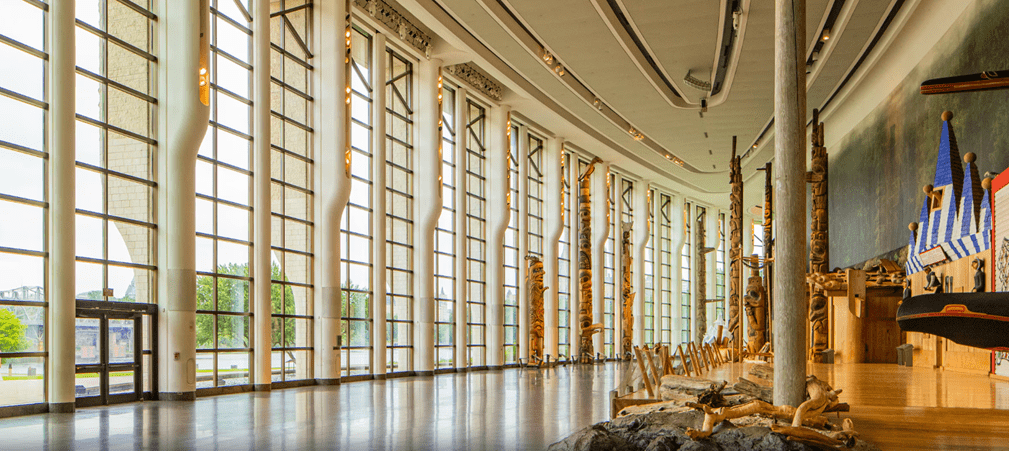
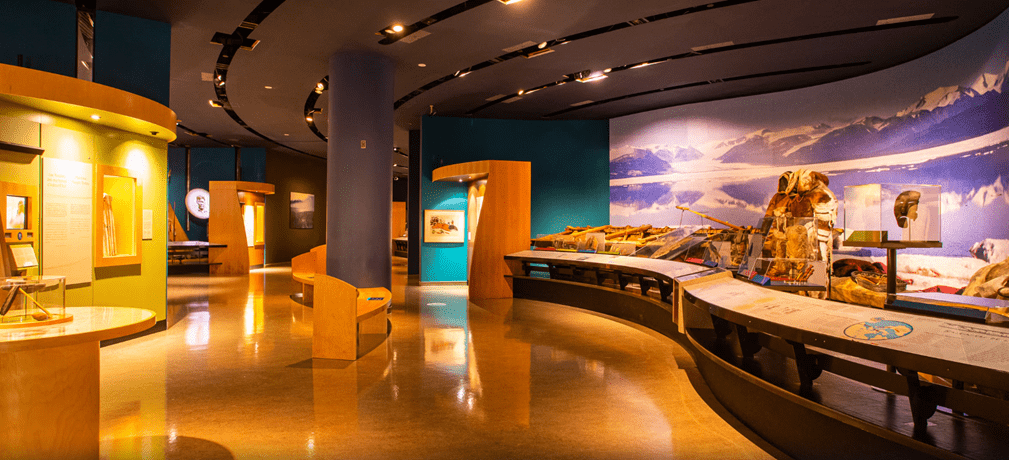
- On the first level, you’ll find galleries dedicated to Canada’s Indigenous peoples. For example, the Grand Hall features the Spirit of Haida Gwaii. These exhibits delve into their history, cultural identity, artistic expression, and both traditional and contemporary ways of life. The Grand Hall is truly considered the heart of the museum, showcasing some of its most prized artifacts. A defining feature is a wall of windows offering an incredible view of the Ottawa River and Parliament Hill. On the opposite wall, visitors can admire a massive, colourful photograph of a forest landscape—it’s actually the largest colour photograph in the world! Also on the first floor is the First Peoples Hall, which is divided into three thematic zones: Indigenous presence, ancient ties to the land, and the arrival of newcomers over the last 500 years.
- The second level houses three galleries for rotating exhibitions. Interestingly, some of these are developed by the Canadian Museum of History’s own staff, while others are curated by Canadian and international institutions.
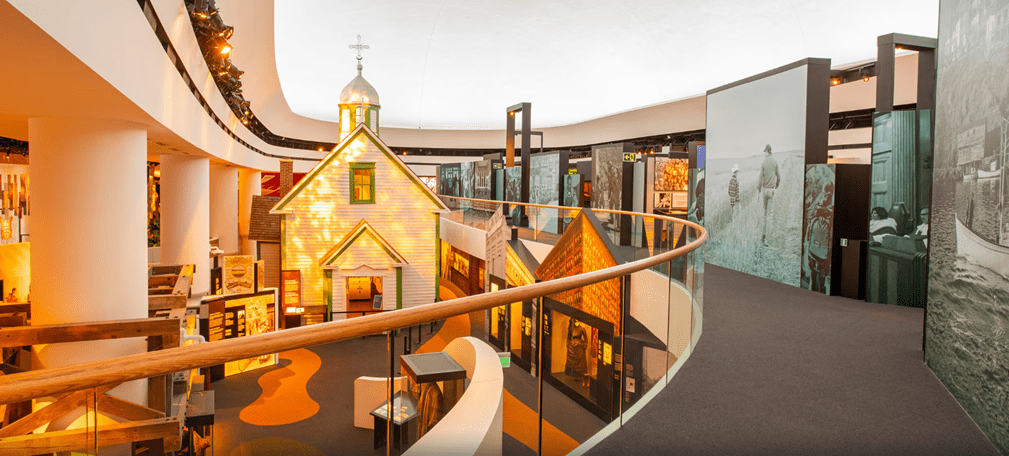
- Levels three and four are home to the Canadian History Hall. These exhibits allow visitors to explore and discover Canada’s history in depth. On June 29, 2007, the “Faces to Faces” exhibition opened on the top floor. This exhibit showcases famous Canadian figures, including writers, artists, explorers, activists, military personnel, and politicians. Initially, it featured 27 individuals, with the lineup periodically changing, though the total number of individuals is expected to remain consistent.
An “Architectural Gem”
The Canadian Museum of History is also known as an “architectural gem,” designed by renowned architect Douglas Cardinal. The building exudes grandeur, with intricate curves and symbolic designs that truly reflect Canada’s rich cultural heritage. The Canadian Museum of History harmoniously blends with its natural and urban surroundings. The building’s design evokes the formation of the North American continent, with its shape “sculpted by winds, rivers, and glaciers.”
This iconic landmark spans a remarkable 93,000 square metres, a testament to Canada’s commitment to preserving and celebrating its unique story.
Every detail and design element of the museum has been meticulously thought out. For instance, over 30,000 square metres of Tyndall stone, quarried in Manitoba and also used for the Parliament of Canada, were used to clad the museum’s exterior.
While the museum’s interior galleries are a major draw, the outdoor areas offer equally delightful experiences. Visitors can stroll through a tranquil Zen garden, marvel at a captivating waterfall, and discover thoughtful design elements. The museum’s outdoor space isn’t just an extension of the exhibits; it’s an integral part of the community, serving as a popular spot for picnics. What’s more, it’s part of a network of river pathways and a venue for well-known local festivals.
Beyond an architectural tour of the museum grounds, exploring its fascinating symbolism and elements, you can also embark on an outdoor museum quest! It’s a family-friendly outdoor adventure, complete with a “Museum Questory” handout that will serve as your guide.

Reasons for its Popularity
The Canadian Museum of History (formerly the Canadian Museum of Civilization) holds the title of the country’s most visited museum. Each year, it welcomes over 1 million locals and tourists, with figures from 2014 showing more than 1.3 million visitors. Everyone comes to learn more about Canada’s rich history and diverse culture. The remarkable achievements of Indigenous peoples are also a key draw.
Here’s a quick rundown of why it’s so popular:
- It offers a wide array of exhibits covering Canadian history across different periods, from ancient times to the present day. A special focus in these exhibits is placed on the history and culture of Canada’s Indigenous peoples, making it a crucial heritage centre.
- The museum houses unique collections, including the world’s largest collection of totem poles. Additionally, you’ll find artifacts that showcase various facets of Canadian history and culture.
- Inside the building is the Canadian Children’s Museum, which features interactive exhibits designed to help kids explore different cultures from around the world. These hands-on elements make visiting the museum with children a fun and educational experience – one they’ll definitely want to repeat!
- Modern technology enhances the visitor experience. For example, the CINÉ+ theatre screens both 2D and 3D films.
- Another major reason for its popularity and high attendance is its stunning architecture. The museum building itself, with its flowing, wavy forms, is an architectural landmark that draws people in at any time of year.
Wondering what to do in Ottawa? Perhaps it’s time to discover the Canadian Museum of History, located at 100 Laurier Street in Gatineau, Quebec, right across the Ottawa River from Parliament Hill.
A visit to this museum will appeal to visitors of all ages and interests. Every guest is sure to find something special that resonates with them. For those who are just considering a visit, a virtual tour of the Canadian Museum of History is also available.
This virtual tour was organized by interim CEO Chantal Amyot. It offered curatorial insights into some of the most fascinating exhibits, including those on art and Indigenous traditions. Chantal Amyot also discussed a real Ukrainian church and how science and community action helped bring an ancient Inuit hunter back to life. Virtual guests can learn many new stories that reflect the identity of Canadians as a nation.