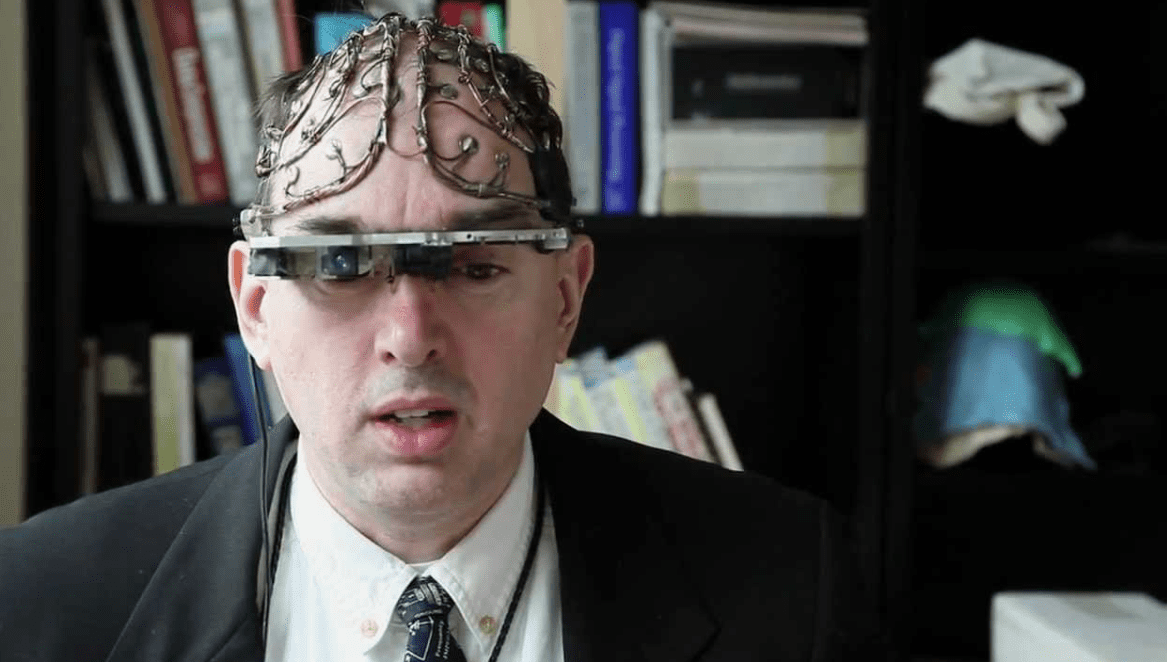

Steve Mann is renowned in Canada as the pioneer of wearable computers. In the 20th century, he developed the world’s first wearable computer for general use. What set Mann’s invention apart was its multifunctionality—it could perform more than one task, such as tracking time, making it a groundbreaking innovation. Learn more at iottawa.net.
The Story of Steve Mann
Born in 1962 in the small Canadian city of Hamilton, Steve Mann showed an early passion for science and technology. He excelled in school and decided to dedicate his life to technical sciences. Mann earned his bachelor’s degree from McMaster University and continued his studies there to obtain a master’s degree. During his academic career, he demonstrated exceptional talent, authored numerous valuable and engaging research papers, and actively participated in university competitions and events. His contributions earned him a place in McMaster University’s Alumni Hall of Fame.
Steve Mann pursued a doctorate in media arts, graduating from the Massachusetts Institute of Technology (MIT), where he also worked for a brief period. During his time at MIT, he made several significant contributions, including:
- Organizing a computer students’ group in the laboratory;
- Establishing a new and innovative discipline.
In addition to his academic activities, Steve Mann maintained a prolific research career. Over the years, he authored more than 200 papers, many of which became highly influential in fields such as:
- Intelligent image processing;
- Humanity’s capabilities in the era of wearable computers, including his publication “Cyborg”;
- Wireless application protocols;
- Human-computer interaction;
- Development of practical applications.
Steve Mann’s Projects and Inventions
Steve Mann soon realized that theory alone was not enough, so he began working on practical innovations. His inventions spanned areas such as:
- Computer-mediated reality;
- Computational photography.
His groundbreaking contributions earned him recognition as a globally renowned and talented scientist, particularly for his work in:
- Innovative wearable computers;
- High-dynamic-range imaging;
- Chirplet transforms;
- Hydraulophone technology;
- Natural user interfaces;
- Scratch input systems;
- Mobile blogging;
- Augmented reality;
- Humanistic intelligence.
Steve Mann’s career is marked by countless useful inventions, scientific papers, and impactful contributions. His passion for technical sciences established him as a prominent Canadian inventor, professor, and creator of innovative, multifunctional computers. Throughout his career, he dedicated himself fully to developing and advancing his inventions.
One of Steve Mann’s most significant initiatives is his educational project for Canadian students. His research work is studied at the University of Ottawa, where he teaches the course “Cyborg Law.” Additionally, Mann collaborates with Ian Kerr, the Chair of Ethics, Law, and Technology at the University of Ottawa, on a project allowing students to explore the intersections of law, ethics, and technology. Topics include anonymity, surveillance, monitoring, and authentication as part of the “Cyborg Law” curriculum—a subject extensively covered in Mann’s writings.