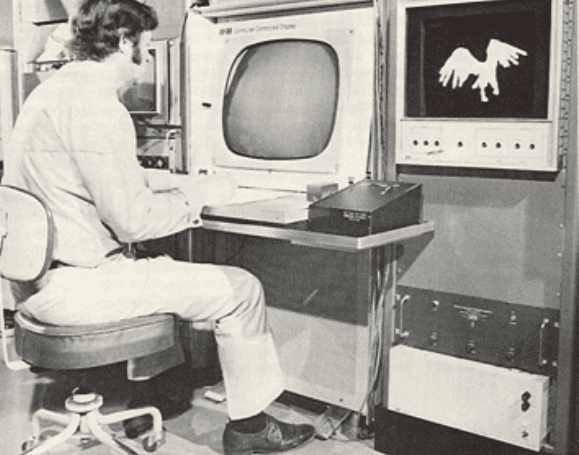

Ottawa has always been a city that keeps pace with progress. Often referred to as the second “Silicon Valley,” it has been shaped by remarkable individuals who, in the 20th century, propelled technological advancements and transformed startups into leading IT companies. One such trailblazer was Nestor Burtnyk, a true “artist without a canvas.”
Before the advent of computer animation, creating an animated film required painstakingly drawing each frame by hand—a time-consuming and labour-intensive process. Nestor Burtnyk revolutionized this field, earning his place as a pioneer in the history of computer animation. Read more at iottawa.net.
Education in Electrical Engineering
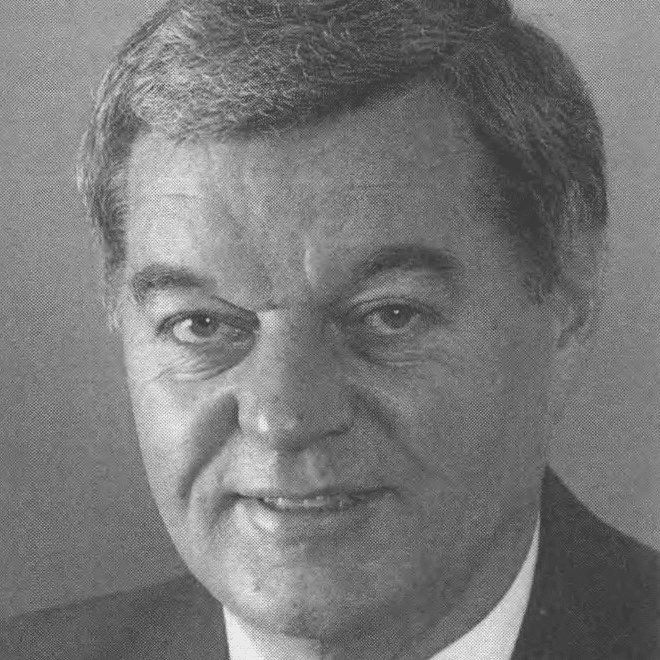
Born in Ethelbert, Manitoba, to a Ukrainian immigrant family, Nestor Burtnyk graduated with a degree in electrical engineering from the University of Manitoba in 1950. He began his career at the Radio and Electrical Engineering Division of the National Research Council (NRC) in Ottawa. His early work included designing high-frequency radio direction-finding equipment, synthetic aperture antennas, and conducting research on ionospheric propagation.
The Animation Project

In 1968, while working at the NRC in Ottawa, Burtnyk initiated a groundbreaking project in computer graphics. His goal was to create a system where animators could generate visual content without needing specialized knowledge in computer programming—a radical idea at the time.
In 1969, he attended a conference hosted by Disney animators in California. Inspired by the traditional animation process demonstrated there, Burtnyk collaborated with fellow researcher Marceli Wein to develop computer-generated animation. Their early efforts involved creating rough sketches of keyframes using computer images, laying the foundation for what would later become a major innovation in animation technology.
A New Technique: Keyframe Animation

The 1970s marked a turning point for Burtnyk. He developed a novel technique that allowed for keyframe animation using computers. This technology was adopted by the National Film Board of Canada, as well as broadcasting corporations in Canada and the UK, to produce higher-quality animations.
One of the most notable works to utilize this technology was the National Film Board’s short film Hunger. In 1973, the film won the Jury Prize at the Cannes Film Festival and was nominated for an Academy Award in 1974. This success solidified Burtnyk’s reputation as a leader in computer animation and brought international recognition to Ottawa and Canada.
Career in Robotics and Awards

In 1975, after his initial success, Burtnyk was appointed head of the Computer Graphics Section at the NRC. In 1980, he became the manager of the Computer Technology Research Program, where he spearheaded projects in intelligent robotics.
From 1983 to 1991, Burtnyk served as Canada’s official representative in the International Advanced Robotics Program. His work focused on real-time sensor processing and robotics computation. By the 1990s, he helped establish new laboratories for autonomous systems at the NRC’s Information Technology Institute in Ottawa, conducting research on tele-robotic control systems and three-dimensional vision.
Burtnyk retired from robotics research in 1995 but not before leaving a lasting impact on the field.
In 1997, he and Marceli Wein received an Academy Award for Technical Achievement for their pioneering work in developing keyframe animation techniques. In 2000, Burtnyk’s contributions earned him a place in the prestigious Order of Canada.

Addressing Challenges with Modern Solutions
Before computer animation, animators had to painstakingly draw thousands of small images to create movement for films. This process was labor-intensive and expensive. Burtnyk’s innovative NRC graphics system allowed animators to create animated sequences on-screen without needing programming expertise.
The system enabled users to manipulate individual images using input devices like keyboards, light pens, and manual positioners, creating independent movements that, when combined, formed seamless animations. Supplementary software further enhanced the 3D graphics capabilities of the system.
Before Burtnyk’s innovations, animation relied solely on programming—a slow and tedious process. His technology revolutionized the industry, making animation more accessible and efficient.
Legacy in Computer Animation

Nestor Burtnyk’s contributions laid the foundation for 21st-century animation. His keyframe animation technique remains a cornerstone of the animation industry today. Over his 45-year career at the NRC, he not only advanced animation but also made significant strides in robotics.
His research in image processing and robotics contributed to the development of Canadarm, Canada’s iconic robotic arm used in space exploration.
Through his vision and dedication, Burtnyk transformed animation and robotics, leaving an indelible mark on both fields. His achievements continue to inspire and shape the technological landscape, making him a celebrated figure in Canada’s history of innovation.