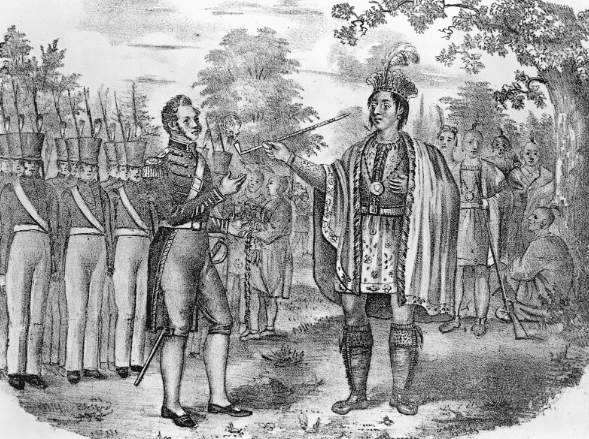

Ottawa is a fascinating and unique city. Like most historic cities, it has its own distinctive dialects and linguistic traditions. In Ottawa’s case, this includes the well-known local dialects of Odawa and Ojibwe, whose roots trace back to the 17th century. Learn more with I Ottawa.
Linguistic Features in Ottawa
The first recorded mention of the Odawa dialect dates back to 1615, during the initial encounter between the Indigenous peoples of the Ottawa Valley and a European explorer, Samuel de Champlain. These Indigenous peoples were the original speakers of the two main varieties of Ottawa’s dialects.
In the 21st century, the Odawa dialect has spread far beyond Canada’s capital due to migration. Today, speakers of Odawa and Ojibwe can be found in Ontario, Michigan, Kansas, and Oklahoma.
The Odawa dialect has undergone the most significant changes over time. One notable feature is the loss of certain sounds within words, such as unstressed vowels, which sets it apart from other varieties. Additionally, Odawa exhibits a highly flexible word order compared to English.
The Origins of the Odawa Language
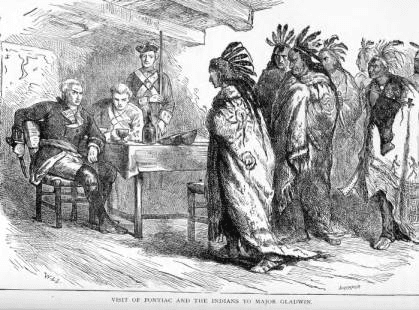
Like any language, the Odawa dialect evolved from a parent language. Over centuries, it branched into several distinct but related languages. The proto-Algonquian language, an ancestral linguistic reconstruction of the Algonquian family, is considered the root of Ojibwe. From Ojibwe emerged the Odawa dialect, which has undergone considerable transformation and innovation over time.
Analysis of the Odawa Language
Interestingly, the name “Ottawa” (or “An Odawa”) derives from French, reflecting the name the Indigenous peoples called themselves. French writings first documented the Odawa dialect in 1641.
The Odawa dialect and its variations are primarily spoken around the Great Lakes region. Speakers are also found in provinces like Quebec, Saskatchewan, and Manitoba. Some dialects, such as Northern Ojibwe and Algonquin, are even spoken as far afield as Montana, Alberta, North Dakota, and British Columbia.
In the late 20th century, Canadian researchers conducted linguistic studies by surveying speakers across various regions. The findings revealed significant differences between dialects, as speakers from different areas often struggled to understand one another.
The Development of Odawa Writing
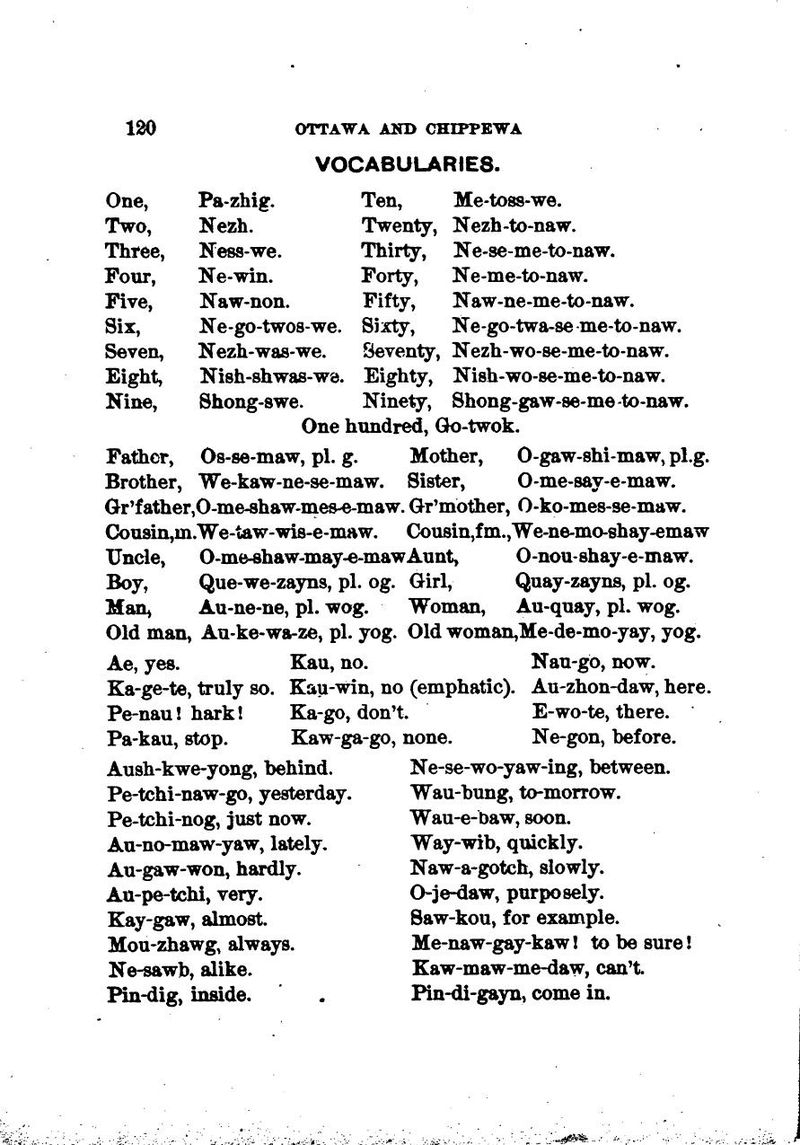
The writing system for the Odawa dialect emerged thanks to English- and French-speaking Europeans who explored Canada in the 17th and 18th centuries. They began documenting the language using their own alphabets, attempting to adapt and simplify the orthography for better comprehension.
In the 19th and 20th centuries, written forms of the language began to play a crucial role in its study and preservation. However, there was no standardized orthography for the Odawa dialect until 1985, when a dictionary of the language was published in Canada. This milestone led to a 1996 conference where Indigenous speakers of Ojibwe dialects discussed establishing spelling standards. By the early 21st century, a comprehensive grammar guide for the Odawa dialect was published.
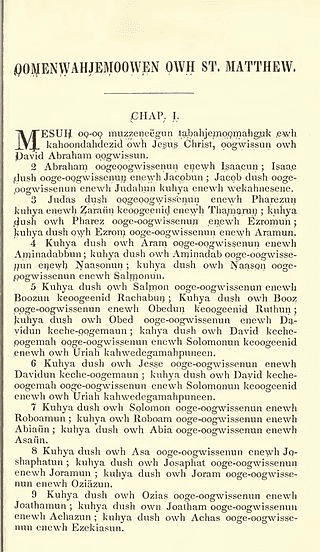
In the 18th century, Ottawa speaker Blackbird wrote a history of his people in English, including grammar, vocabulary, phrases, and translations of the Ten Commandments and the Lord’s Prayer in Odawa and Ojibwe. Other notable contributors to the documentation of Odawa included Catholic missionaries Baraga and O’Meara, as well as Leonard Bloomfield, whose research in the 1930s and 1940s significantly enriched the understanding of the language.
Geographic Spread of the Language
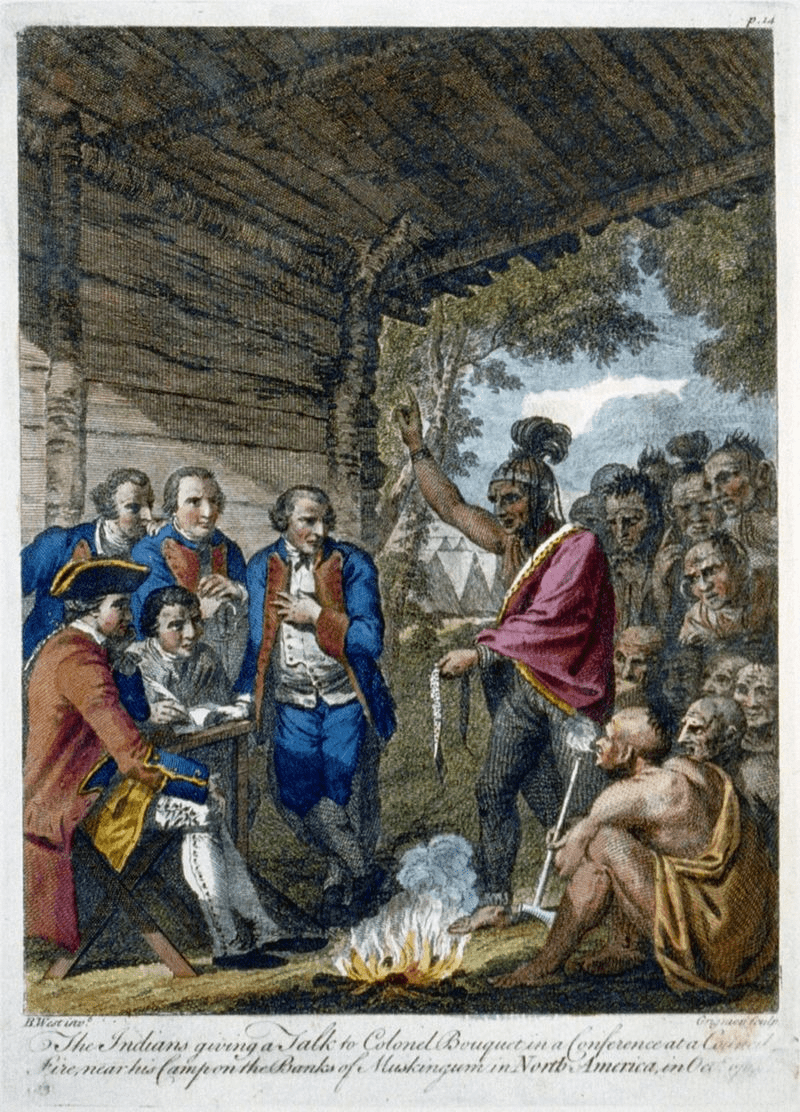
The first documented encounter between Europeans and Odawa speakers in the 17th century occurred on Manitoulin Island. At the time, speakers also lived on the Bruce Peninsula, northern Michigan, and the Georgian Bay’s north and east shores. Following European contact, widespread migration ensued, bringing Odawa speakers into contact with other Ojibwe-speaking tribes.
The Odawa spoken in southern Ontario stems from Southwestern Ojibwe speakers who migrated to Odawa-speaking territories in the 1850s. Locally, this dialect is often called “Chippewa” or “Ojibwe” due to its ancestral roots. In the mid-19th century, several thousand Potawatomi-speaking migrants from Indiana, Michigan, and Wisconsin also settled in Ottawa. These groups gradually adopted the local Odawa dialect, incorporating Potawatomi and Ojibwe vocabulary.
Threats to the Language
In the 21st century, Ottawa’s Indigenous language faces the threat of extinction. A decline in speakers has occurred due to the influx of English-speaking immigrants to Canada. Consequently, significant efforts have been made to revitalize the language, including teaching it in primary and secondary schools.
Despite the challenges, the enduring legacy of Ottawa’s linguistic history remains a vital cultural treasure that continues to inspire preservation efforts.